A shingle roof rarely fails without warning. It gives you months, sometimes years, of small signals first. The homeowners who catch those signals pay for a repair. The ones who do not pay for a replacement plus drywall, insulation, and sometimes framing.
Here is what we look for on roofs across Florence, Brandon, Pearl, and Jackson, ordered roughly from "keep an eye on it" to "call someone this week."
What you can see from the ground
Granules in the gutters
Shingle granules are the colored mineral coating that protects the asphalt from sun. Some loss is normal, especially on a new roof. A steady layer of coarse grit in the gutters or a pile at the downspout outlet on an older roof means the shingles are wearing out. Hail speeds this up dramatically. IBHS research found that shingles exposed to small hail and normal weathering aged far faster and became much more vulnerable to the next big storm.
Curling, cupping, or cracked shingles
Shingle corners that curl up, tabs that cup in the middle, or visible cracks mean the asphalt has dried out and lost its flexibility. Curled shingles also lose their seal, which lets wind get under them. This is age, and the fix depends on how widespread it is.
Bald or dark patches
Areas where the surface looks darker or shinier than the rest are spots where the granules are gone and the bare asphalt is showing. Sun works on those spots fast. A few small patches can be addressed by replacing individual shingles. Patches across the whole slope mean the roof is at the end of its life.
Missing, lifted, or creased shingles
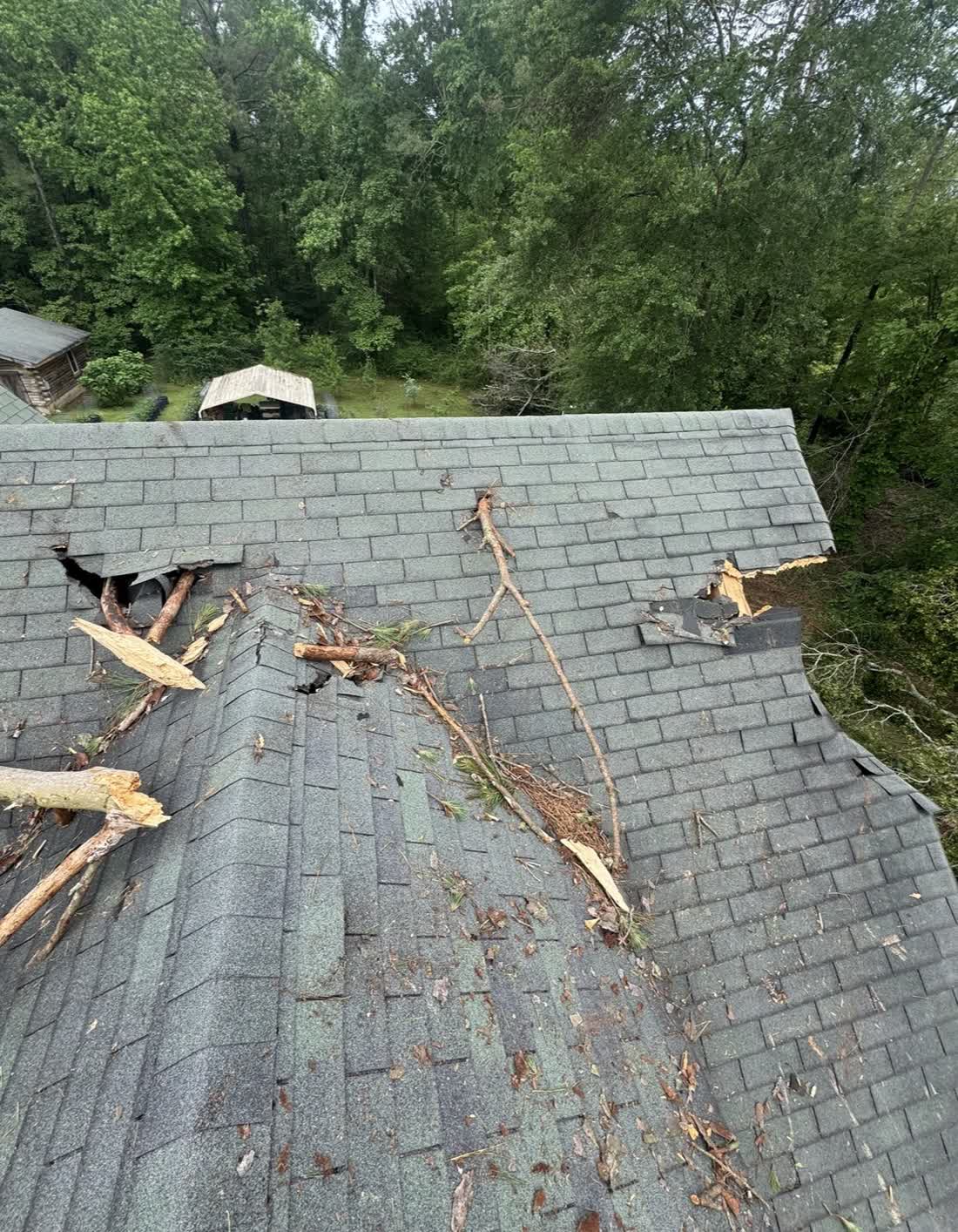
Mississippi wind lifts shingles that have lost their seal, and once a shingle creases along the nail line it will not reseal. A missing shingle exposes the underlayment, which is not designed to be the roof for long. This is a repair that should not wait for the next storm.
Moss and debris
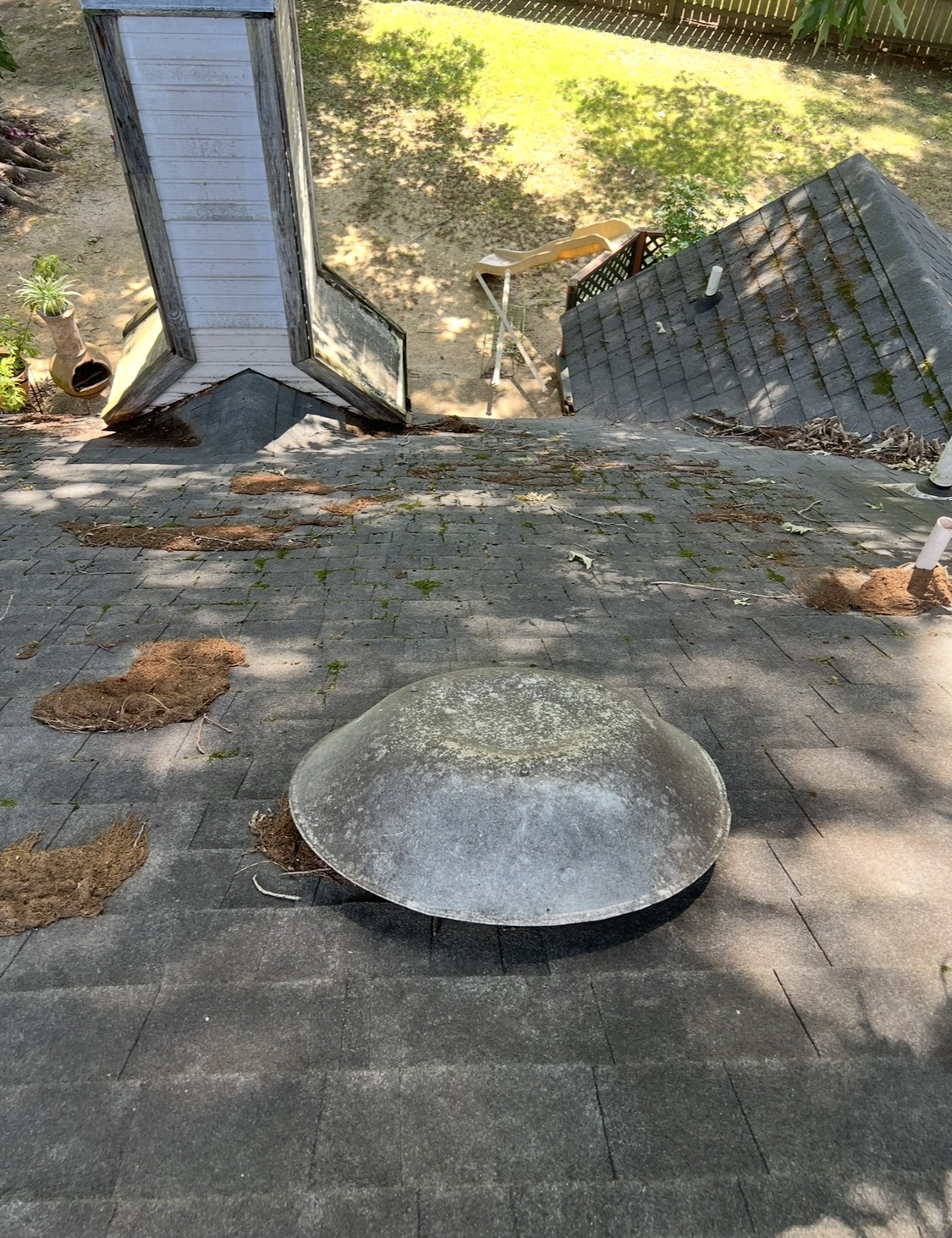
Moss, leaves, and pine straw in valleys and behind chimneys hold water against the shingles and slow drying. Under the shade of big oaks and pines, the north-facing slope often wears out years before the sunny side. Keep it clear and keep the limbs trimmed back.
Sagging along the ridge or between rafters
A visible dip in the roofline is not a shingle problem. It is decking or framing that has been wet long enough to lose strength. This needs a professional look soon.
What you can see up close
If you can safely see these from a ladder at the eave, or in photos from a drone or a phone held over the edge, they matter more than most shingle wear:
Cracked pipe boots
The rubber collars around plumbing vents dry out and split in our heat, often within 10 to 15 years. A split boot is one of the most common leak sources we find, and it is one of the cheapest fixes on the roof. See where most leaks start.
Rusted, lifted, or missing flashing
Flashing is the metal at chimneys, walls, and valleys. When it rusts through, pulls loose, or the sealant at its edge fails, water goes straight into the wall or attic. Flashing problems cause more leaks than shingle problems on many roofs.
Exposed nail heads
Nails that have backed out and popped through the shingle above are small holes waiting for rain. They are common on roofs installed with the wrong nail length or on decking that has expanded and contracted for years.
Dented soft metal after hail
Dents on the roof vents, gutters, and the metal edge of the roof are the easiest way to tell that hail hit hard enough to bruise the shingles. If the vents took hits, the shingles did too, even if you cannot see it. That is worth an inspection while a claim is still possible. Our guide on what to do after a storm walks through it.
What you can see from inside
Ceiling and wall stains
Brown rings, bubbling paint, or soft drywall mean water has already been through the decking and insulation. The stain is almost never directly under the leak. Water travels along rafters and the top of the drywall before it drops.
Attic signs
On a sunny day, look up from inside the attic with the lights off. Daylight through the decking means a hole. Dark staining on the underside of the decking or on rafters means repeated wetting. A musty smell, damp insulation, or mold on the sheathing mean moisture is a regular visitor, from a leak or from poor ventilation.
Rising cooling bills
A roof with failing shingles and a sealed, overheated attic makes your air conditioner work harder through the summer. It is not a diagnosis on its own, but paired with any of the signs above it points to the roof. Our post on attic ventilation explains why.
Repair, or replace?
The test we use is simple. If the roof is under about 15 years old and the damage is isolated, a targeted repair makes sense: a section of shingles, a boot, a run of flashing. If the roof is past 20 and showing wear across whole slopes, the Asphalt Roofing Manufacturers Association considers it a prime candidate for reroofing, and repairs become a way of paying for a new roof a few hundred dollars at a time. Our roof lifespan guide gives the ranges we see locally.
Either way, the first step is the same. A free inspection with photos tells you exactly what is wrong and what it takes to fix it, with no obligation. If a small repair is all you need, that is what we will recommend.