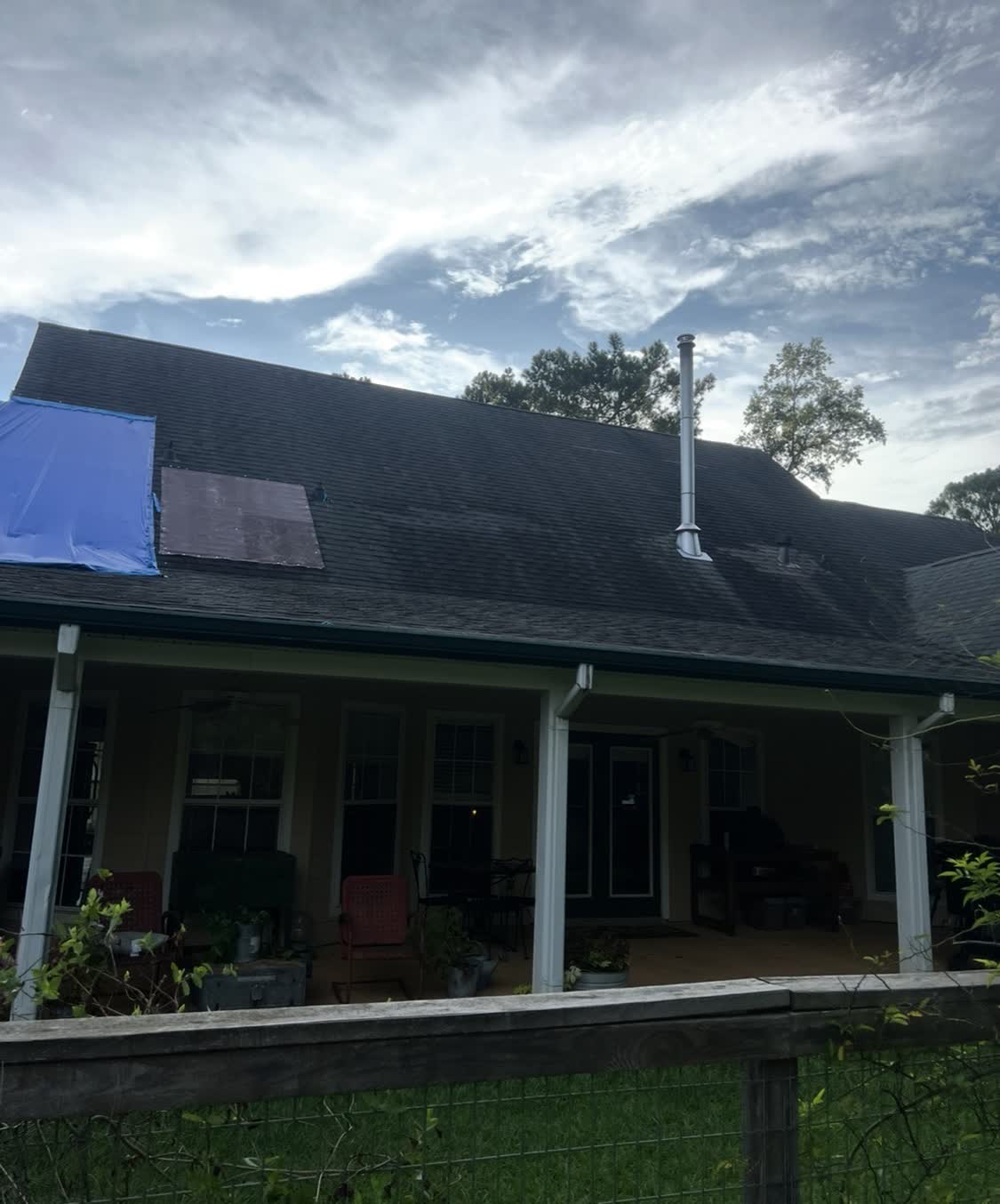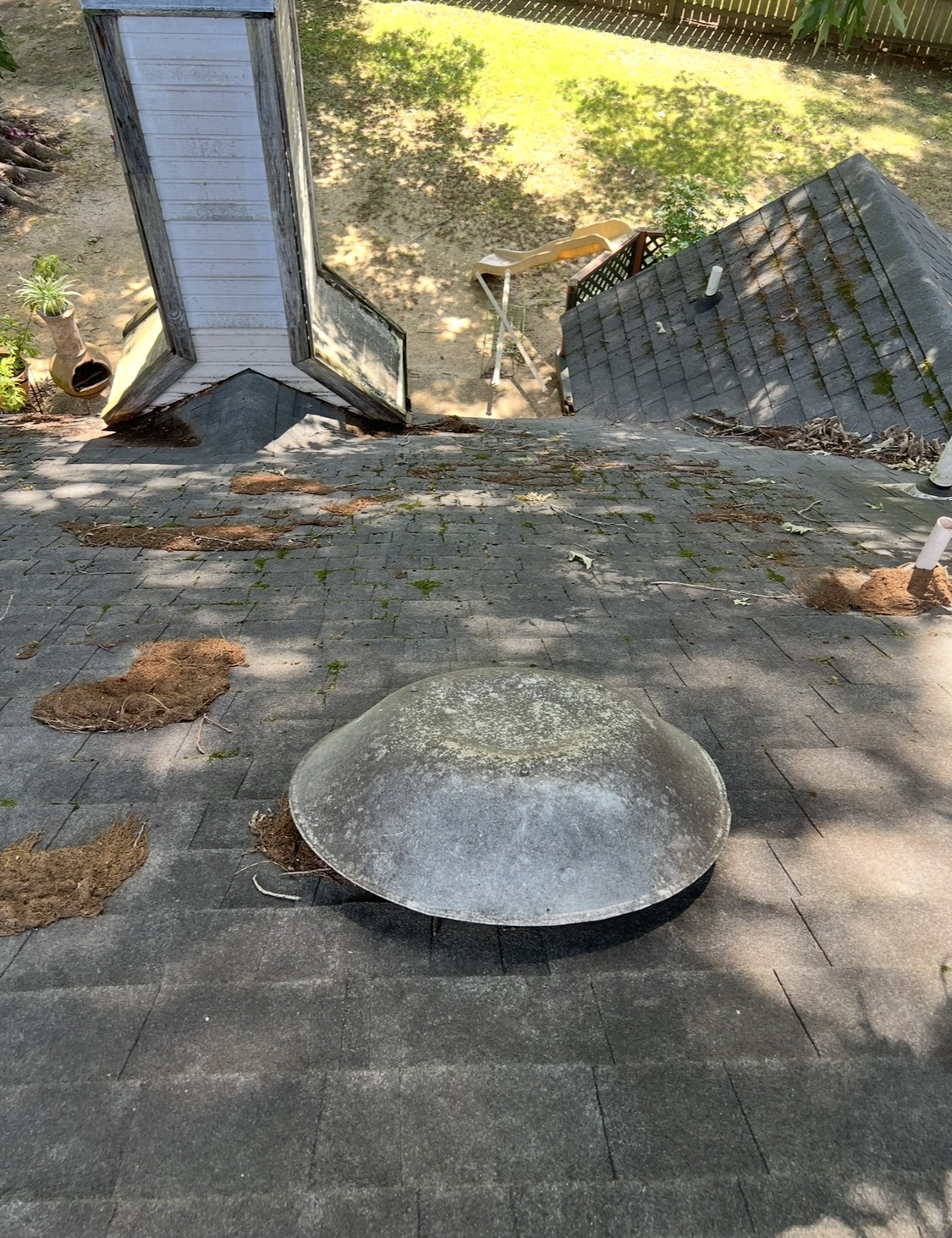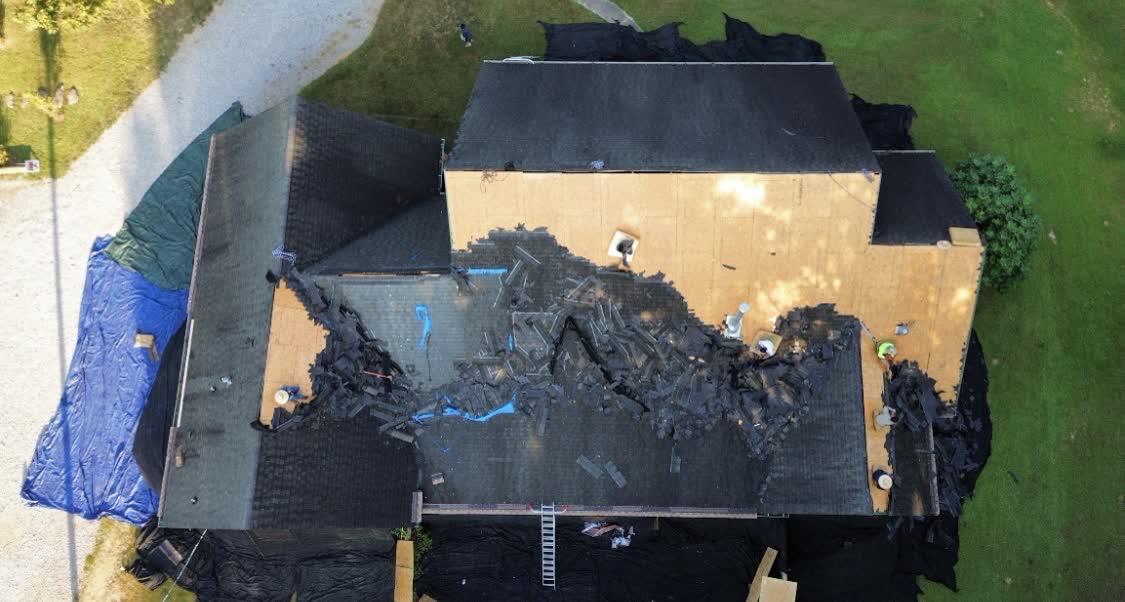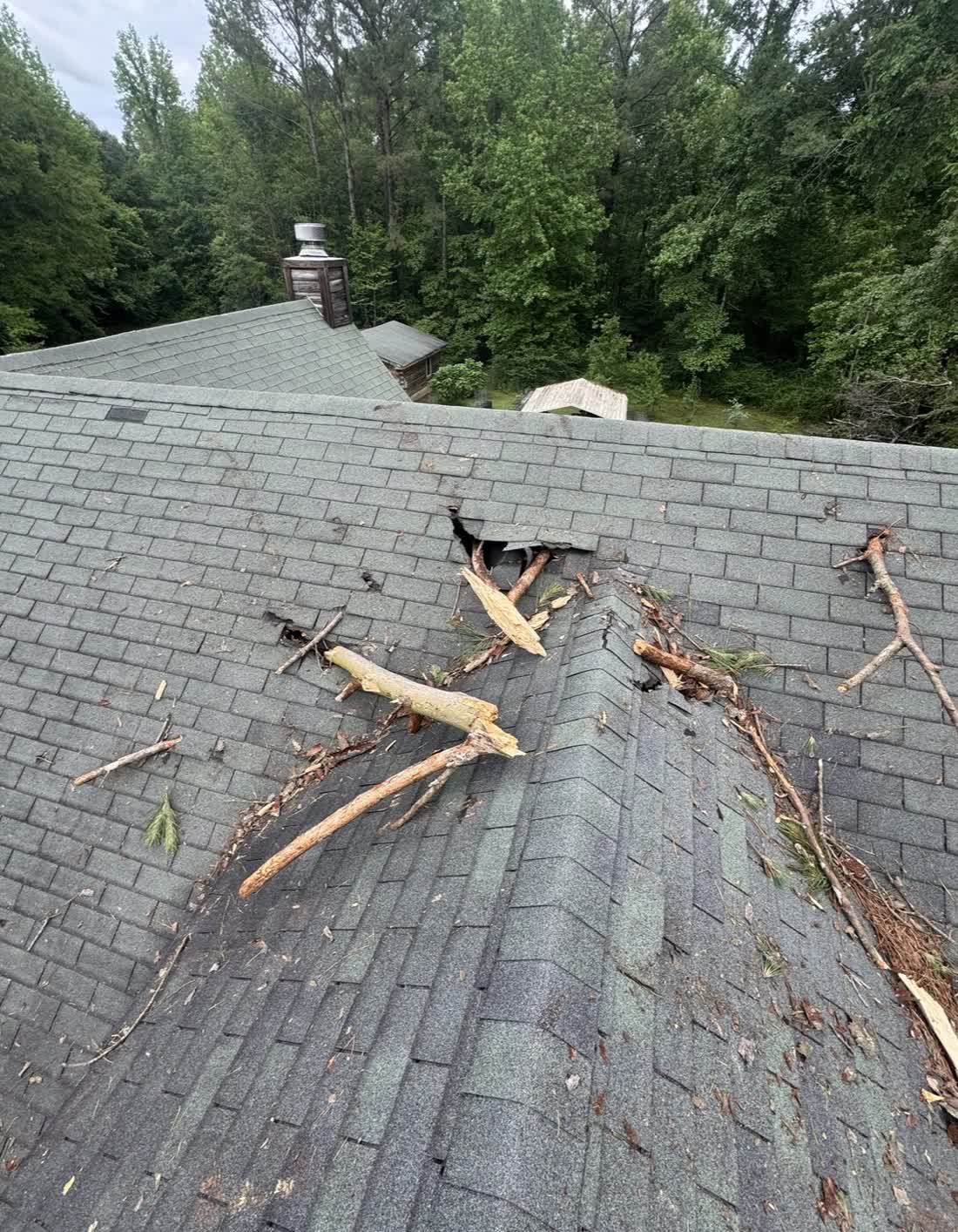
Central Mississippi gets its share of severe weather. The NOAA state climate summary counts an average of 46 tornadoes a year across Mississippi between 1985 and 2019, and the straight-line wind and hail that come with those same storm systems hit far more roofs than the tornadoes do. If you live in Florence, Brandon, Pearl, Flowood, Richland, or Jackson, a storm will test your roof sooner or later.
What you do in the first few days decides how smoothly the rest goes. This checklist follows the order the Mississippi Insurance Department recommends in its Post-Disaster Claims Guide, with the roofing details we have learned from handling storm work locally.
Step 1: Stay safe
Do not climb on a storm-damaged roof. Wet shingles, loose debris, and hidden soft spots in the decking put people in the hospital every storm season. Stay clear of downed power lines and any limbs still hanging over the house. If a limb has come through the roof and into the attic, treat the area below it as unsafe until it has been looked at.
Step 2: Look for damage from the ground
You can learn a lot without a ladder:
- Shingles in the yard or on the driveway.
- Missing, lifted, or creased shingles visible from the street.
- Dents on soft metal: gutters, downspouts, roof vents, and window screens. Dented vents are one of the best ground-level signs that hail hit hard enough to bruise the shingles.
- Granules piled at the downspout outlets. Hail knocks the protective coating off shingles even when it does not crack them.
- Stripped leaves on trees and shrubs, which tells you how big the hail was.
- Debris in valleys and limbs on the roof.
Then check inside. Look at ceilings and the tops of walls for new stains, and step into the attic with a flashlight to look for daylight, wet insulation, or dripping.
Step 3: Take photos of everything
The Insurance Department's guide is direct about this: take photos or video of the damaged areas before anything is moved or repaired. Photograph the yard debris, the dented gutters, the ceiling stains, and the date-stamped view of the roof from every side. If you have older photos of the house, keep them handy. They show the roof's condition before the storm.
Step 4: Prevent further damage, and keep the receipts
Your policy expects you to keep the damage from getting worse. That means a tarp over an opening, a bucket under a drip, and moving belongings away from a wet ceiling. The state guide puts it in capital letters: keep all receipts for emergency repairs, because the insurer will generally reimburse reasonable costs to protect the home.
Tarping a roof is not a homeowner job in most cases. Call us at (601) 519-3319 and we will get it covered and stabilized. What we will not do is start permanent repairs before the damage has been documented for your claim.
Step 5: Report the claim promptly
Call your insurance company or agent as soon as you know you have damage. Most policies require prompt notice, and some limit how long you have to file after a storm. When you call, the state guide suggests asking:
- What your deductible is, and whether there is a separate, higher deductible for wind and hail
- When to expect a call from an adjuster
- Whether your policy pays replacement cost or actual cash value on the roof
That last one matters. Under replacement cost coverage, the insurer pays to replace the roof without deducting for age. Under actual cash value, depreciation comes off the top, and on a 15-year-old roof that can be a large share of the check. Some replacement cost policies pay the depreciated amount first and release the rest after the work is done. Ask how yours works and what the deadline is for that second payment.
Step 6: Get a professional inspection before the adjuster visit
A lot of storm damage is not visible from the ground, especially hail bruising and lifted shingles that have not blown off yet. IBHS research shows that even small hail, under an inch, weakens shingles in ways that make the next storm far more damaging. Our storm damage inspection is free. We walk the roof, photograph every affected slope, and give you a straight answer on whether a claim makes sense. If the damage is minor and below your deductible, we will tell you that too.
The state guide notes that you are not required to have contractor bids before the adjuster comes, but a detailed written estimate can help. Ours is itemized.
Step 7: Be there for the adjuster
The adjuster is the person who determines how much damage there is and what your policy covers. The guide recommends that you be present, take notes, and get the adjuster's name and contact information. We meet adjusters on-site so the damage we documented gets seen in person rather than argued over later. Whether the adjuster works directly for your carrier or is an independent adjuster hired for the storm, you do not pay them.
Step 8: Choose your contractor carefully
After every major storm, out-of-town crews show up in Rankin and Hinds County knocking on doors. Some are fine. Some are not, and they leave before the first leak. The Mississippi Attorney General and State Board of Contractors publish the same advice after every weather event: verify the license, get a written contract with a payment schedule tied to completed work, do not pay in full up front, and do not sign anything that transfers your insurance claim to the contractor. We cover the red flags in detail in how to avoid storm-chaser roofing scams.
Mississippi requires a State Board of Contractors license for residential roofing over $10,000. You can look up any contractor, including us at license #22693, on the board's search page.
Step 9: Repair or replace, and close the claim
Once the scope is agreed, the work gets done, and it should be done by the crew that inspected it. We restore what was damaged, from a section of shingles to a full replacement, with materials suited to the next storm rather than the last one. Keep every invoice. If your policy holds back depreciation, those documents are what release the final payment.
A note on timing
The worst outcomes we see are not from the storm. They are from a roof that sat open for three weeks while the homeowner waited to "see if it leaks." Water in the decking and insulation is not covered as storm damage once the insurer decides it happened because nothing was done. If you are not sure whether your roof was hit, the inspection is free, and it takes less than an hour.