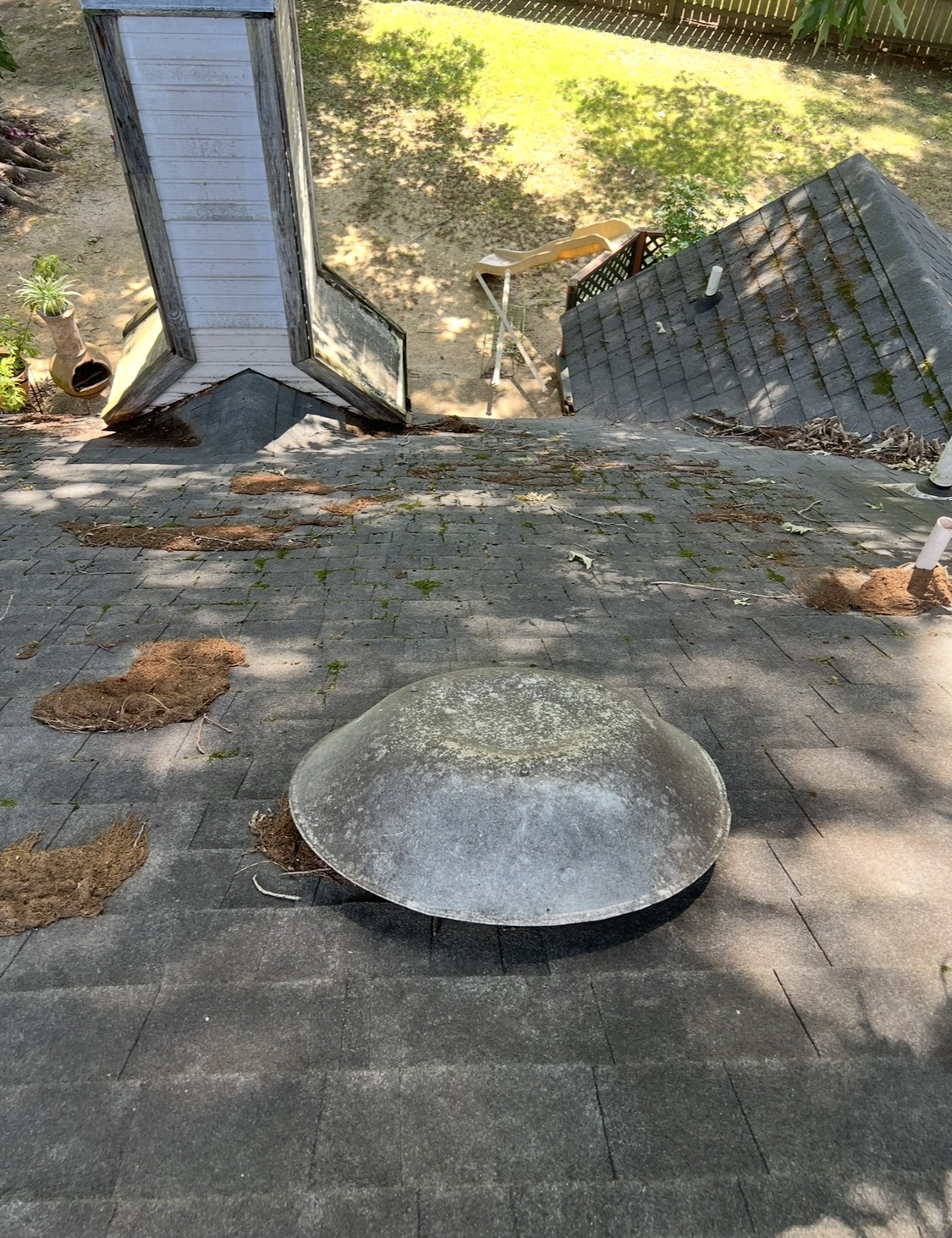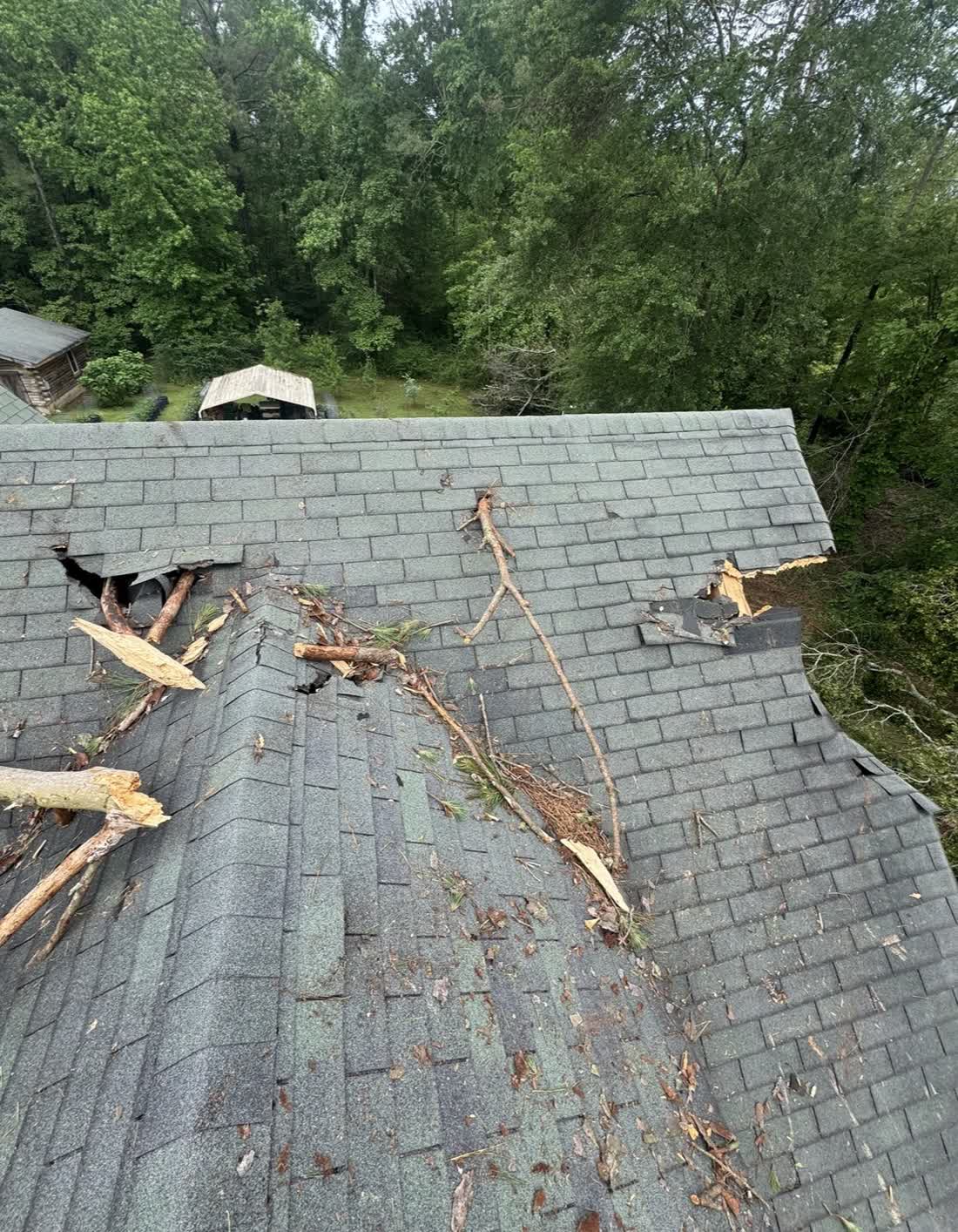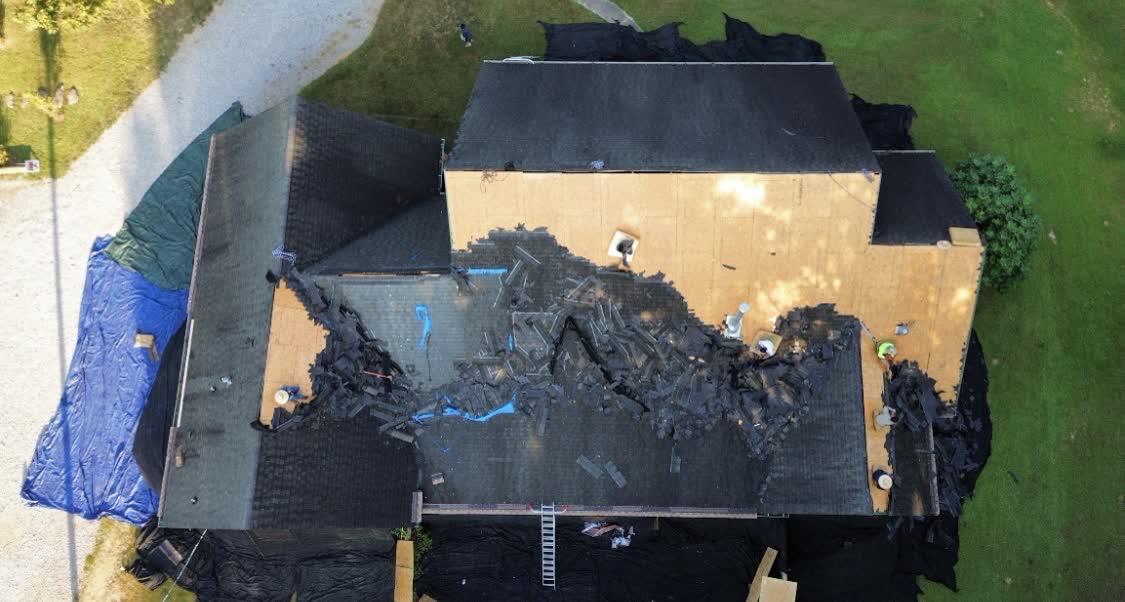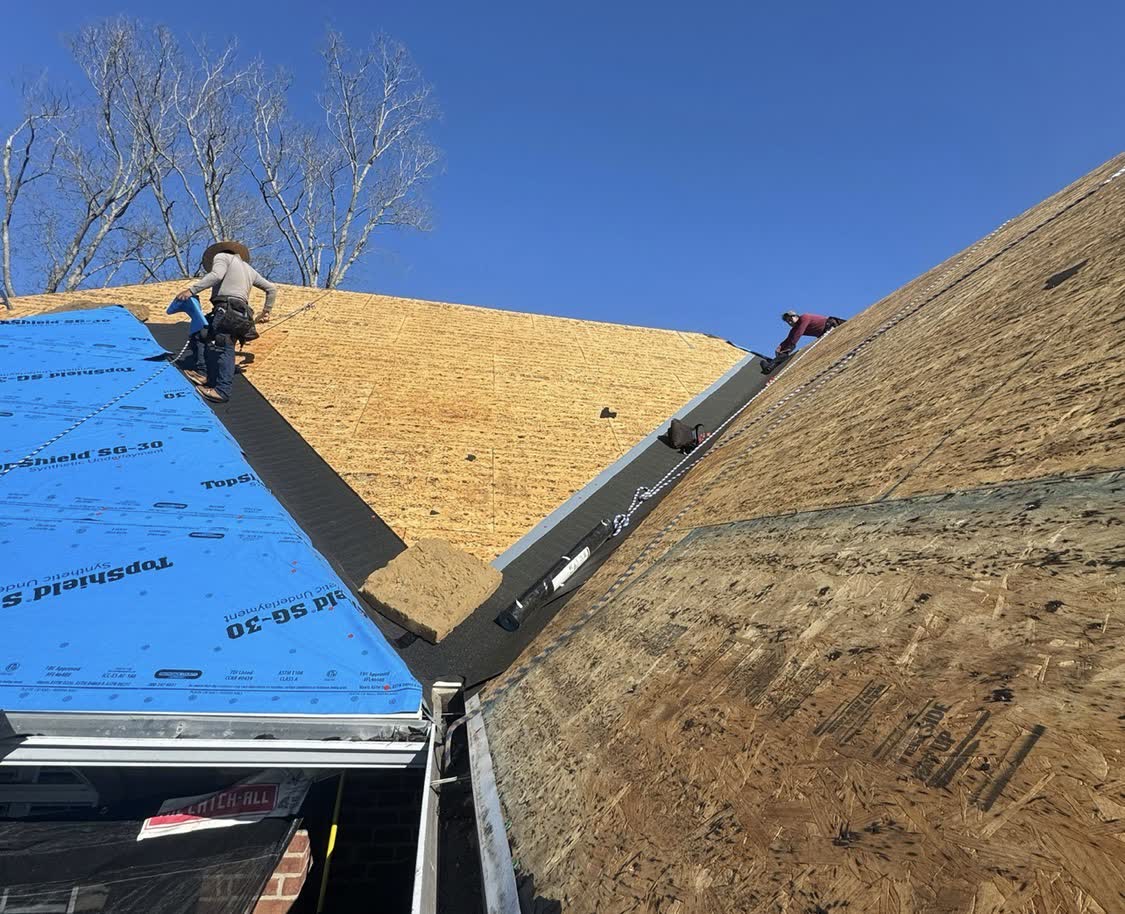
When a homeowner in Florence or Brandon calls about a ceiling stain, the first guess is usually "I need new shingles." When we get on the roof, the shingles are often fine. The water is coming in at a chimney, a wall, a valley, or a plumbing vent, at the flashing.
Flashing is the metal, and the rubber, that seals every place where the roof surface is interrupted. It does a harder job than the shingles do, and in our climate it fails first. Here is where it lives, how it breaks, and what a correct repair looks like.
What flashing does
Shingles shed water downhill by overlapping. That works on an open slope. It stops working wherever the roof meets something vertical or changes direction, because water hits the obstruction and has to be steered around it. Flashing does the steering. Done right, it laps under the shingle above and over the shingle below at every step, so water is always handed to a surface that leads out. Done wrong, or left to rust, it hands the water into the wall.
Where flashing fails most often
Chimneys
Chimneys are the number one leak location we see. A correct chimney has three parts: step flashing woven into each course of shingles along the sides, a saddle or cricket on the uphill side of wider chimneys to split the water around it, and counter flashing set into the mortar joints and lapped over the step flashing. Common failures are counter flashing that was surface-mounted with caulk instead of cut into the mortar, mortar joints that have eroded and let the counter flashing pull out, a missing cricket that lets water pool against the back of the chimney, and the old tar-over-everything repair that cracks in a season.
Sidewalls and headwalls
Anywhere a roof slope runs into a wall, such as a second story, a dormer, or the wall beside a porch roof, needs step flashing on the sides and continuous flashing at the top. The most common miss here is the kickout. At the bottom of a sidewall, a small angled piece of flashing is supposed to kick the water out into the gutter. Without it, water runs down behind the siding at the corner, and the first sign is rotted sheathing or a soft spot in the wall a few years later. We find missing kickouts on a large share of the homes we inspect.
Valleys
Valleys carry more water than any other part of the roof, because two slopes drain into one channel. Open metal valleys use a wide metal pan with the shingles cut back from the center. Closed valleys weave or cut the shingles across the valley over a membrane. Both work when installed correctly over an ice-and-water barrier. Both leak when there is no barrier under them, when nails are driven too close to the center, or when debris builds up and dams the flow. Pine straw in a valley is a leak waiting on the next heavy rain.
Pipe boots
Every plumbing vent that comes through the roof is sealed with a boot, usually a metal base with a rubber collar. The rubber dries out and cracks in our heat, often in 10 to 15 years, well before the shingles wear out. A cracked boot leaks a little every rain, and the water runs down the pipe into the wall or ceiling. It is one of the cheapest repairs on a roof and one of the most common causes of a mystery stain.
Drip edge
Drip edge is the metal along the eaves and rakes that guides water off the edge of the decking and into the gutter. Without it, water wicks back under the shingles and rots the edge of the decking and the fascia behind the gutter. Many older homes in the Jackson metro were built without it. We install it on every replacement.
Skylights and other penetrations
Skylights, satellite mounts, solar attachments, and HVAC penetrations each need their own flashing kit or a properly built curb. Sealant alone is not flashing. It is a temporary patch that fails in sun.
How Mississippi weather breaks flashing
Three things work on it. Sun bakes the sealants at the edges and dries out rubber boots. Heat cycling expands and contracts the metal against the brick and wood it is fastened to, which loosens fasteners and opens joints. And 56 inches of rain a year, much of it wind-driven in spring storms, finds every opening those first two created. Galvanized flashing also rusts once its coating wears through, and rust holes are a straight path into the house.
Signs your flashing is failing
- Stains on the ceiling near a chimney, an exterior wall, or below a bathroom vent
- Rust streaks running down the shingles below a chimney or vent
- Cracked, curled, or missing sealant along the top edge of chimney flashing
- Counter flashing that has pulled away from the brick
- Peeling paint or soft siding at the bottom corner where a roof meets a wall
- A visible split in the rubber collar of a pipe boot
- Water in the attic that appears only in wind-driven rain
What a correct flashing repair looks like
The right fix depends on what failed, but there are things it never includes. It never includes a coating of tar or roof cement over the existing metal. It never leaves a rusted piece in place because the shingles around it are hard to lift. And it never uses sealant as the primary water barrier.
A proper repair lifts the surrounding shingles, removes the failed flashing, installs new metal lapped correctly with the courses, resets or replaces the counter flashing in the mortar joint, and seals the top edge as a secondary line of defense rather than the only one. Pipe boots are replaced outright. Kickouts are added where they were missing. Our roof repair page lists what we handle.
Why we replace flashing with every new roof
Reusing flashing on a replacement is one of the most common shortcuts in roofing, and it is a big part of why some "new" roofs leak within a few years. The old flashing has already been through 20 or more years of weather. The Asphalt Roofing Manufacturers Association describes flashing as a system component alongside underlayment and ventilation, not an accessory, and we treat it that way. Every replacement we do includes new drip edge, new step and counter flashing, new pipe boots, and an ice-and-water barrier in the valleys and around penetrations. It is a small share of the total cost and the difference between a roof that lasts and one that does not.
If you have a stain you cannot explain, the inspection is free, and we will show you the photos of exactly where the water is getting in.