If we could fix one thing on every roof in Florence, Pearl, Brandon, and Jackson, it would not be the shingles. It would be the ventilation underneath them. A large share of the homes we inspect have an attic that cannot breathe, and that one problem shortens the roof's life, raises the cooling bill, and feeds moisture problems all at once.
What happens in an attic that cannot breathe
In summer, the roof surface absorbs sun all day and radiates that heat into the attic. Without a way out, attic temperatures climb far above the outdoor air. That heat does two things. It cooks the shingles from underneath while the sun cooks them from above, driving out the oils that keep asphalt flexible. And it soaks through the ceiling insulation into the rooms below, so the air conditioner runs longer to keep up.
In winter, the problem flips. Warm, moist air from the house rises into the attic and condenses on the cold underside of the roof decking. In a humid climate with mild winters, that moisture never fully dries. The result is dark staining on the sheathing, mold, rusted nail tips, and decking that slowly loses strength. When we tear off a roof and find soft decking with no sign of a leak, ventilation is usually the cause.
What the code requires
The International Residential Code, which Mississippi jurisdictions adopt, sets the rule in section R806.2. The minimum net free ventilating area is 1/150 of the area of the attic floor. That means a 1,500-square-foot attic needs 10 square feet of net free vent area, split between intake and exhaust. The code allows a reduction to 1/300 only when specific conditions are met, including a vapor retarder in cold climate zones and a set share of the venting placed high in the attic with the rest low.
Net free area is the open area of the vent after screens and louvers, not the size of the hole in the roof. A vent's packaging lists it. Most older homes in the Jackson metro were built to a looser standard, or the vents they had have been painted over, insulated over, or covered by a later addition.
What the shingle warranty expects
Shingle manufacturers describe attic ventilation as part of the roofing system, and the Asphalt Roofing Manufacturers Association defines it as air flowing in low at the eaves and out high at the ridge. Most manufacturer warranties reference adequate ventilation, and an attic that clearly could not breathe gives the manufacturer grounds to deny a claim on a roof that failed early. It is one more reason we check ventilation on every replacement rather than treating it as an add-on.
Balanced intake and exhaust
Ventilation is a loop, not a hole. Air has to come in low and leave high, and the two have to be roughly balanced. The common layout is:
- Intake at the soffits, through continuous vented soffit panels or individual soffit vents, providing about half the total net free area.
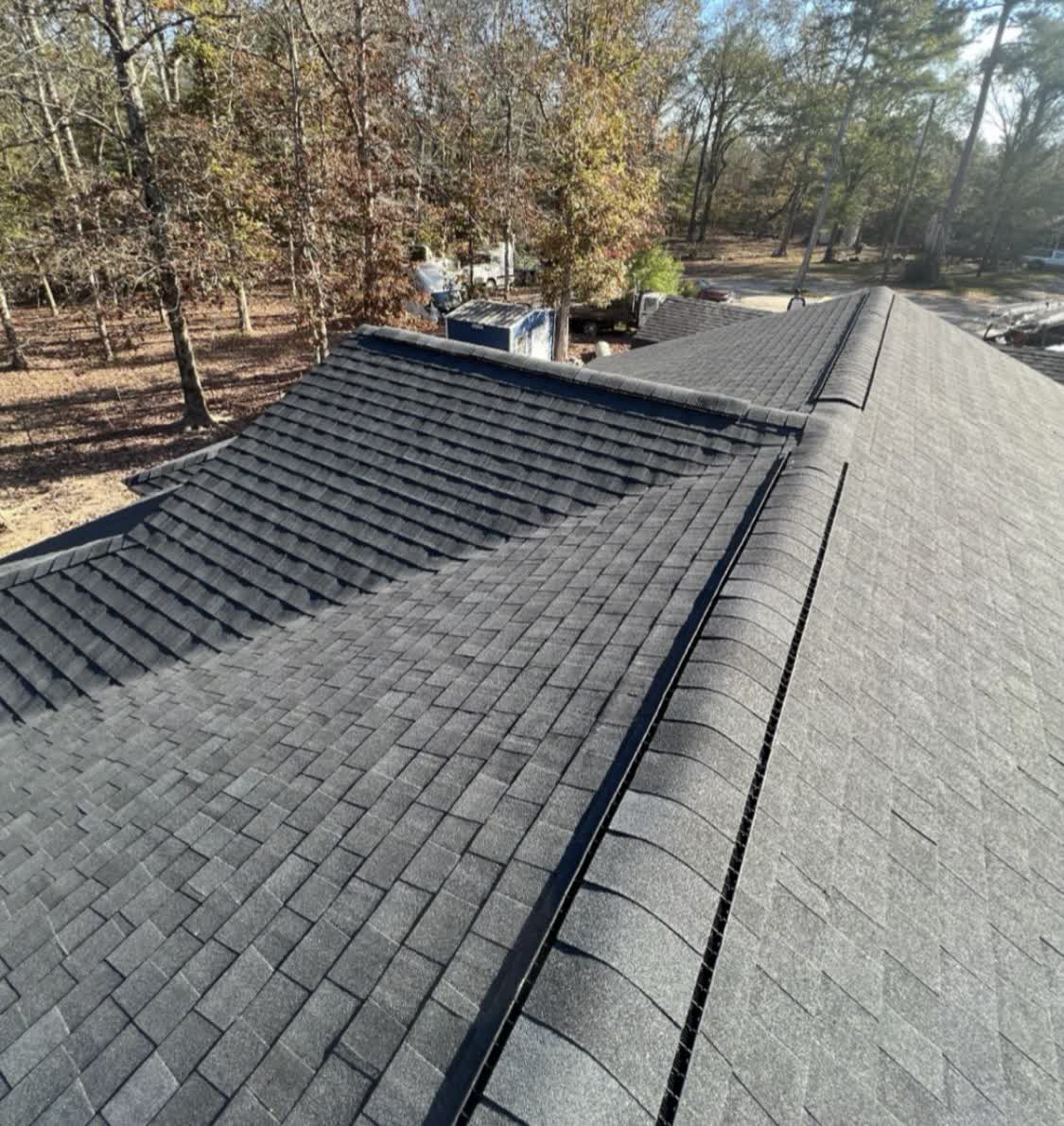
- Exhaust at or near the ridge, through a continuous ridge vent, static roof vents, or turbines, providing the other half.
If the intake is short, the exhaust vents pull air from wherever they can, including through the ceiling from the conditioned house. If the exhaust is short, hot air stacks up under the ridge. Slightly more intake than exhaust is fine. The reverse is not.
The mistakes we see most
Blocked soffits
The number one problem. Blown-in insulation pushed into the eaves, soffit vents painted shut, or solid soffit panels with no venting at all. A ridge vent over blocked soffits is exhaust with no intake, and it does almost nothing. Baffles at the eaves keep the insulation back and the air path open.
Mixed exhaust types
A ridge vent added to a roof that already has turbines or static vents creates a short circuit. The lower exhaust vents become the intake for the ridge vent, air moves in a small loop near the top of the attic, and the soffits go unused. Pick one exhaust system. When we install a ridge vent, we close off the old roof vents.
Bathroom and dryer vents dumping into the attic
Every bath fan and dryer should vent outside through the roof or a wall. Ones that terminate in the attic pump warm, wet air directly into the space that is already struggling with moisture. We find these constantly.
Powered fans without intake
A powered attic fan on a roof with blocked soffits pulls conditioned air out of the house through every gap in the ceiling, which costs you money and can backdraft gas appliances. Fix the intake first. Passive ventilation done right usually makes the fan unnecessary.
Additions that trapped an old roof
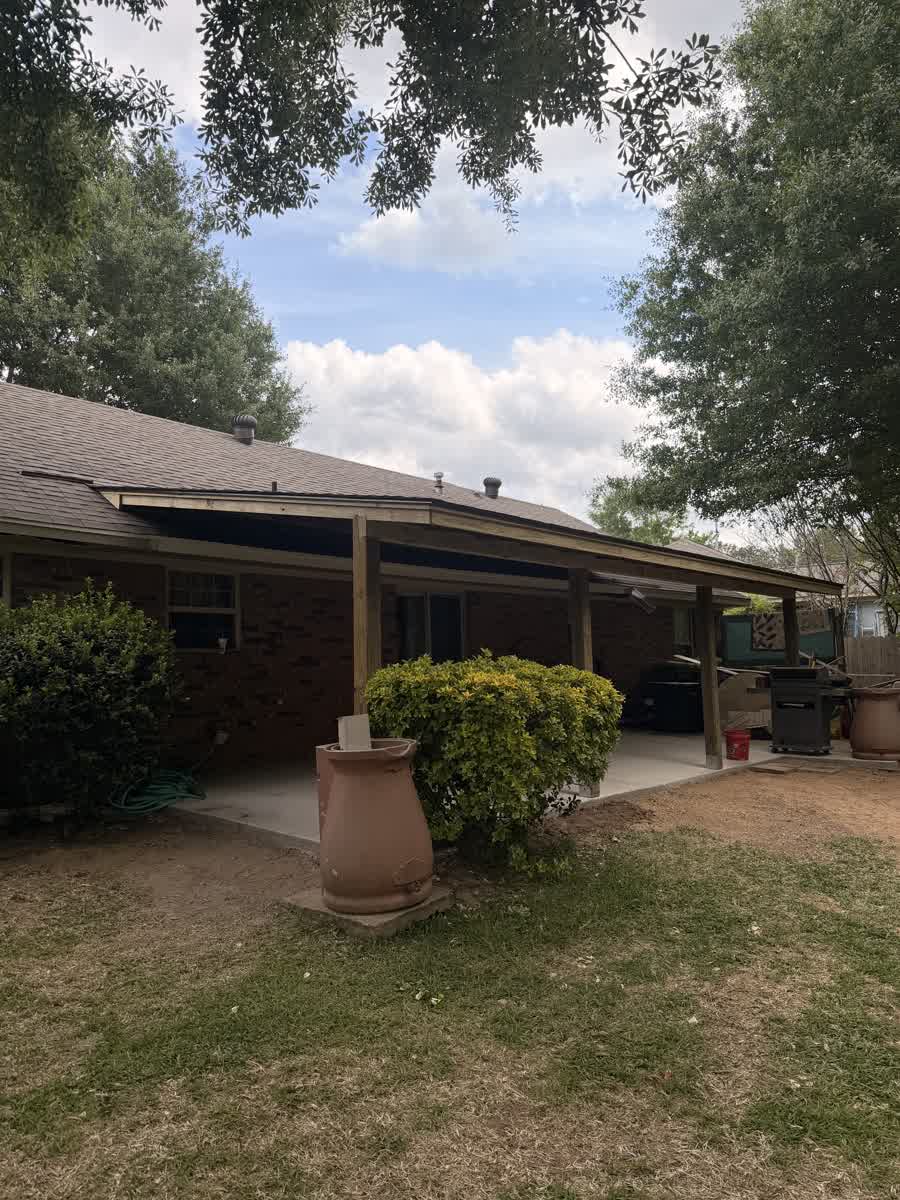
When a room addition or a porch roof is built against an older roof, it often covers the soffit vents on that side. The attic behind it loses its intake and nobody notices for years.
The energy angle
A reflective roof surface and a ventilated attic work together. The Cool Roof Rating Council puts average cool-roof savings at 7% to 15% of cooling costs, and that assumes the heat the roof does absorb has somewhere to go. A reflective shingle over a sealed attic is fighting with one hand. Our energy-efficient roofing page covers the combination, and our comparison of metal vs. shingles for Mississippi heat goes into the surface side.
How to check your own attic
- On a hot afternoon, put your hand on the ceiling of an upstairs room or a hallway under the attic. If it is noticeably warm, heat is coming through.
- From outside, look at the soffits. Do you see vents, and are they open, or painted and clogged?
- From inside the attic, look toward the eaves. Can you see daylight at the soffits, or is the insulation packed against the roof deck?
- Look at the underside of the decking for dark staining, especially on the north slope and around nail tips.
- Count the exhaust vents. If you see both a ridge vent and turbines or static vents, the system is short-circuited.
What we do about it
Every replacement we install includes a ventilation check and a plan to bring intake and exhaust into balance, whether that means a continuous ridge vent, opening the soffits, adding baffles, or closing off vents that fight each other. On an existing roof, many of the same fixes can be done without touching the shingles. Our inspection is free, and it includes the attic where we can get to it.