Siding does the same job for your walls that shingles do for your roof. It sheds water, blocks sun, and protects the sheathing and framing behind it. In Central Mississippi, with about 56 inches of rain a year and humidity that keeps everything damp, siding fails more quietly than a roof does. There is no ceiling stain to warn you. By the time the wall shows a problem, the sheathing behind it has often been wet for years.
Here are the signs we look for on homes in Florence, Brandon, Pearl, and Jackson, and how we decide between a repair and a full replacement.
Signs you can see from outside
Warping, buckling, or bulging
Vinyl siding that has warped or rippled has usually been overheated, either by direct sun on a dark color or by heat reflected from a nearby window, or it was nailed too tightly to move with temperature. Wood and fiber cement boards that bow outward have usually taken on water. Either way, warped siding no longer laps correctly, and water gets behind it.
Cracks, holes, and missing pieces
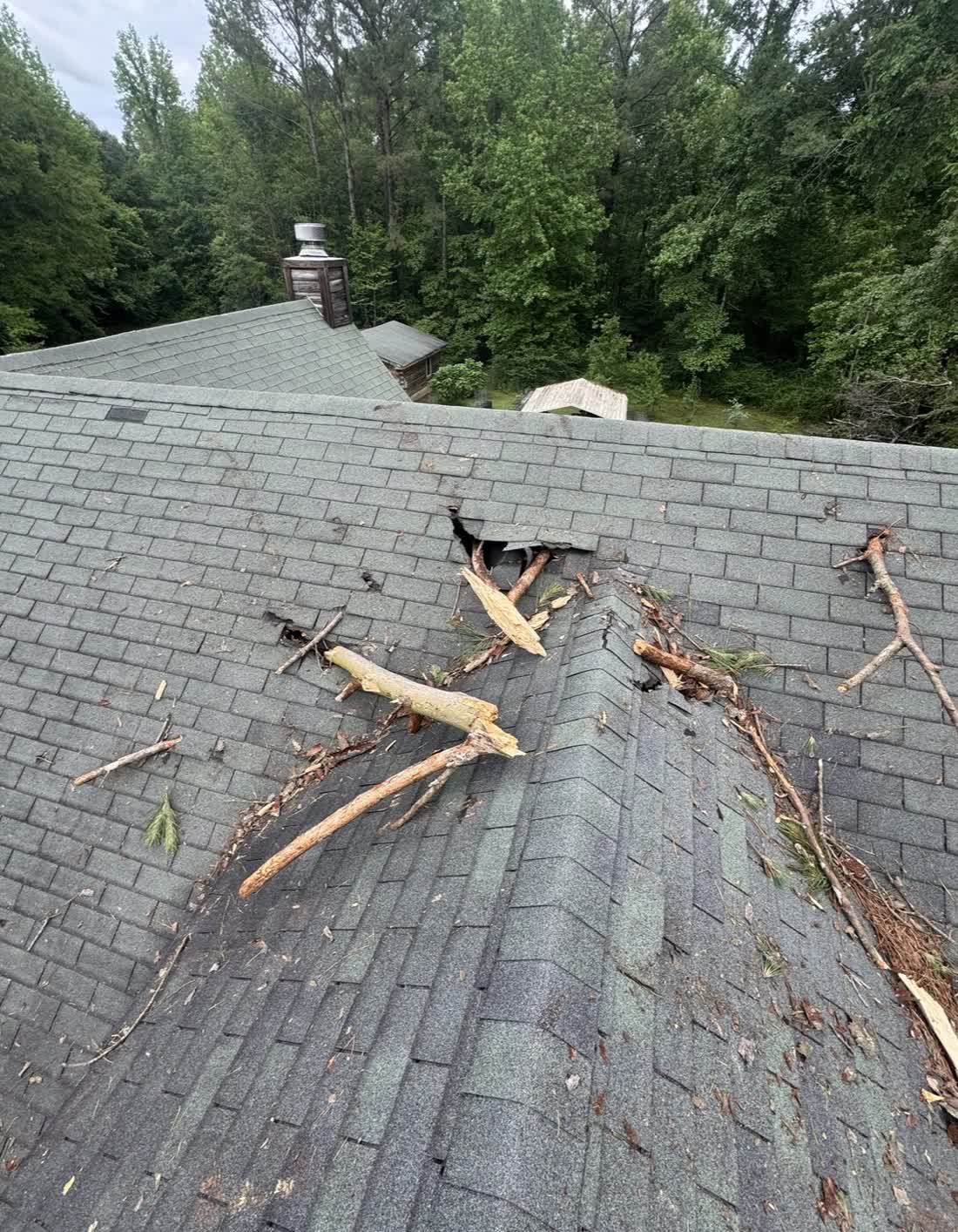
Hail cracks vinyl and dents aluminum. Wind lifts panels off their locking strips and tears them loose. Limbs punch holes. Every opening is a path for water into the wall, and cracks in vinyl tend to spread with each freeze and each hot afternoon.
Rot and soft spots
Press on wood or fiber cement siding near the bottom of the wall, around windows, and at the corners where the roof meets the wall. Soft, crumbling, or spongy material means moisture has been sitting there. Rot near the roofline is often a flashing problem more than a siding problem. See where most leaks start for the kickout flashing detail that causes a lot of it.
Peeling paint and frequent repainting
Paint on wood siding that fails within a few years of a fresh coat is a sign the wood underneath is holding moisture. Paint that bubbles or peels in a specific area usually points at a water source above it.
Fading and chalking
Heavy fading on vinyl, or a chalky residue that comes off on your hand, means the material's UV protection is worn out. It is cosmetic at first, but faded vinyl becomes brittle and cracks more easily in the next storm.
Loose or gapping seams
Panels that have pulled away from corner posts or J-channel, or boards with open gaps at the joints, let wind-driven rain straight through.
Fungus, mildew, and moss
Green or black growth on shaded walls is common in our humidity and is often just surface growth. Growth that keeps coming back in the same spot, especially near the bottom of a wall or below a window, suggests the siding is staying wet from behind.
Signs you can see from inside
- Stains or peeling paint on interior walls, especially below windows or on exterior corners
- A musty smell in a room on an exterior wall
- Mold on baseboards or drywall along an outside wall
- Drafts you can feel near outlets or window trim on windy days
- Cooling bills that have crept up without another explanation, which can point to failed house wrap and gaps behind the siding
Storm damage to siding
The same spring storms that damage roofs damage siding, and the two often get inspected together after a hail or wind event. Hail leaves a pattern of cracks or dents on the sides of the house that faced the storm. Wind pulls panels loose and tears off sections. Both are typically covered by homeowners insurance as storm damage, subject to your deductible. The Mississippi Insurance Department's claims guide gives the same advice for siding as for roofs: photograph the damage before anything is touched, prevent further damage, keep receipts, and report the claim promptly. We inspect roof, siding, and gutters together after a storm and help document all of it. Our guide on what to do after a storm covers the process.
Repair or replace?
The same logic we use on roofs applies here:
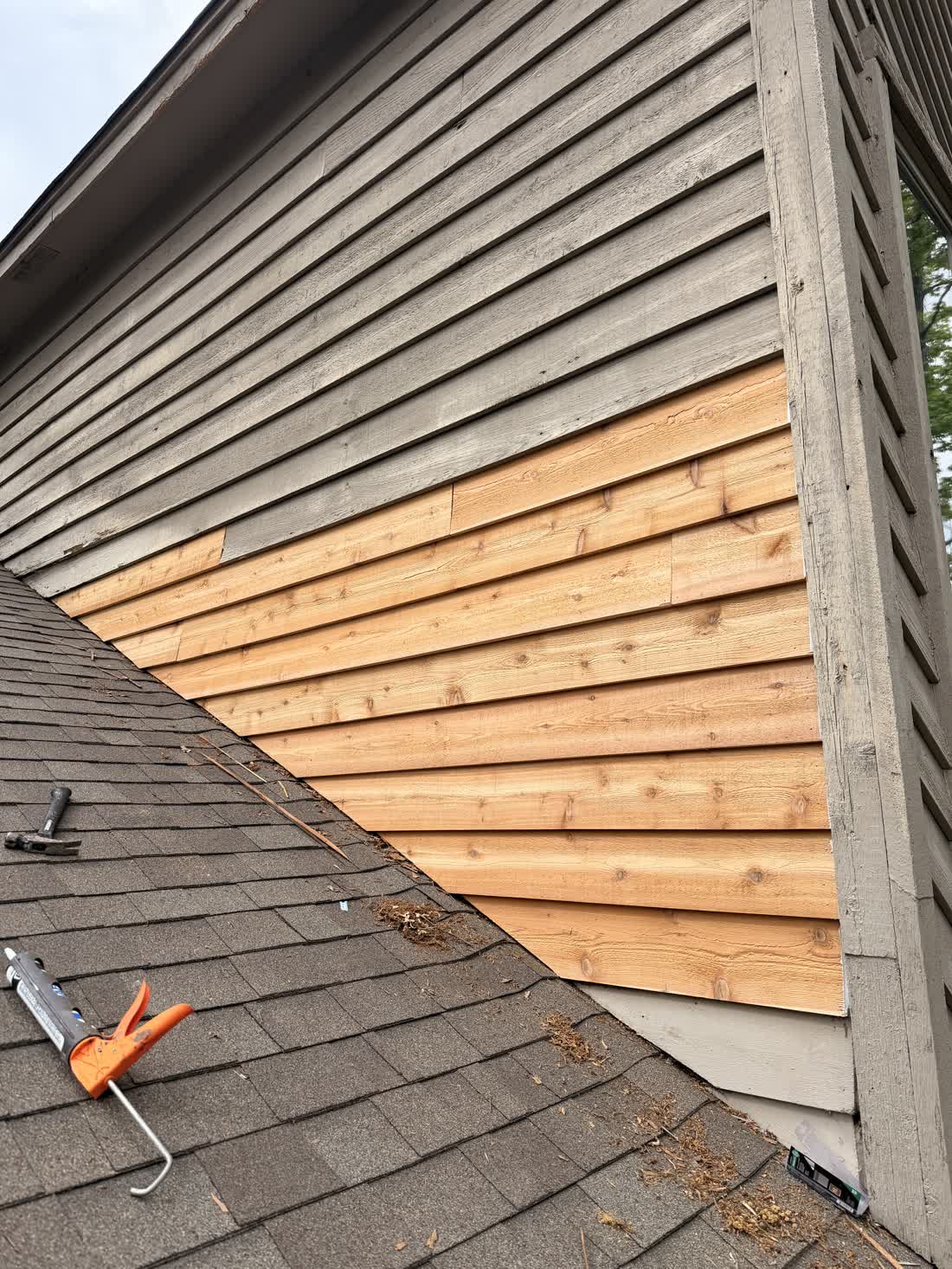
- Repair when the damage is limited to a few panels or boards, the rest of the siding is in good shape, and the sheathing behind the damaged area is dry. We replace the affected pieces and blend the repair.
- Replace when cracking, warping, or rot is widespread, when you find moisture behind the siding in more than one spot, or when the siding is old enough that repairs would be chasing the next failure every year.
A replacement is also the moment to fix what was wrong underneath. We inspect the wall sheathing, install house wrap or a moisture barrier where it is missing, and take care of the trim, fascia, and soffit so the whole exterior works as one system. Our siding installation and repair page lists what is included.
Why the roofline matters to your siding
A large share of the siding rot we find is in one place: the bottom corner where a roof slope runs into a wall. Without a kickout flashing there, water running down the roof edge goes behind the siding instead of into the gutter, year after year. Undersized or overflowing gutters do the same thing along the eaves. If you are replacing siding, it is worth having the roof edge and gutters looked at in the same visit. We handle gutters and exterior work alongside roofing for exactly that reason.
Siding is a secondary service for us, and roofing is our main focus. We say that plainly because it matters to how we scope a job. If your siding problem is really a roof or gutter problem, we would rather fix the cause. The inspection is free either way.