Summer in Central Mississippi lasts from May into September, and the roof is the biggest surface on your house facing the sun. That makes the metal-versus-shingles decision more than a matter of looks here. It affects the attic temperature, the load on your air conditioner, how the roof handles spring hail, and how many times you will buy a roof while you own the home.
We install both, so we do not have a side to sell. Here is how they compare on the things that matter in Florence, Brandon, Pearl, Flowood, and Jackson.
Cooling costs
A roof surface in full summer sun can run far hotter than the air around it, and that heat radiates into the attic and then into the living space. The two properties that matter are solar reflectance, how much sunlight the surface bounces back, and thermal emittance, how quickly it sheds the heat it absorbs.
Metal scores well on both. Unpainted and light-colored metal reflects a large share of the sun's energy, and most residential metal panels are now available with reflective pigments that improve performance even in darker colors. Standard dark asphalt shingles absorb most of what hits them.
How much that saves you depends on the house. The Cool Roof Rating Council, the independent body that rates roofing surfaces, puts the average energy savings for a cool roof at 7% to 15% of total cooling costs. Older Oak Ridge National Laboratory research on reflective roofing in the Southeast reported larger potential savings during air-conditioning months, but that was for homes with poorly insulated attics where the roof was doing most of the damage. We will not promise you a number. What we can say is that in our climate the savings run in one direction, and cool-rated asphalt shingles narrow the gap for homeowners who want to stay with shingles. Our energy-efficient roofing page covers the options.
One caveat that applies to both materials: none of it works if the attic cannot breathe. A reflective roof over a sealed attic still cooks the insulation. See our guide to attic ventilation in a humid climate.
Lifespan
This is where metal pulls ahead. A properly installed metal roof lasts 40 to 70 years depending on the panel and coating, a range State Farm cites and one that matches what we see on older metal roofs around the county. Architectural shingles in our climate run about 25 to 30 years. For a homeowner who plans to stay, metal is often one roof for the life of the house. For a homeowner who plans to sell in ten years, the extra up-front cost may never come back.
Hail
Spring hail is a fact of life here, and it treats the two materials differently. Small hail bruises shingles and knocks off granules, and IBHS research found that shingles exposed to a couple of small-hail events and normal weathering became up to ten times more vulnerable to the next large hail. Most residential metal panels carry a UL 2218 Class 4 impact rating, the highest class, which the Metal Roofing Alliance describes as surviving two hits in the same spot from a 2-inch steel ball without cracking. Metal can still dent cosmetically in large hail, and some insurers treat cosmetic denting differently from functional damage, so check your policy. Some carriers also offer discounts for Class 4 roofs of either material. Ask your agent.
Wind
Both can be installed to handle Mississippi wind. Architectural shingles rated to ASTM D7158 Class H are tested to 150 mph, and they reach that only when nailed to spec. Standing seam metal locks each panel to the deck with concealed clips and has no exposed edges for wind to catch. The install matters more than the material on wind. A poorly nailed shingle roof and a poorly clipped metal roof both lose in a storm.
Standing seam vs. exposed-fastener metal
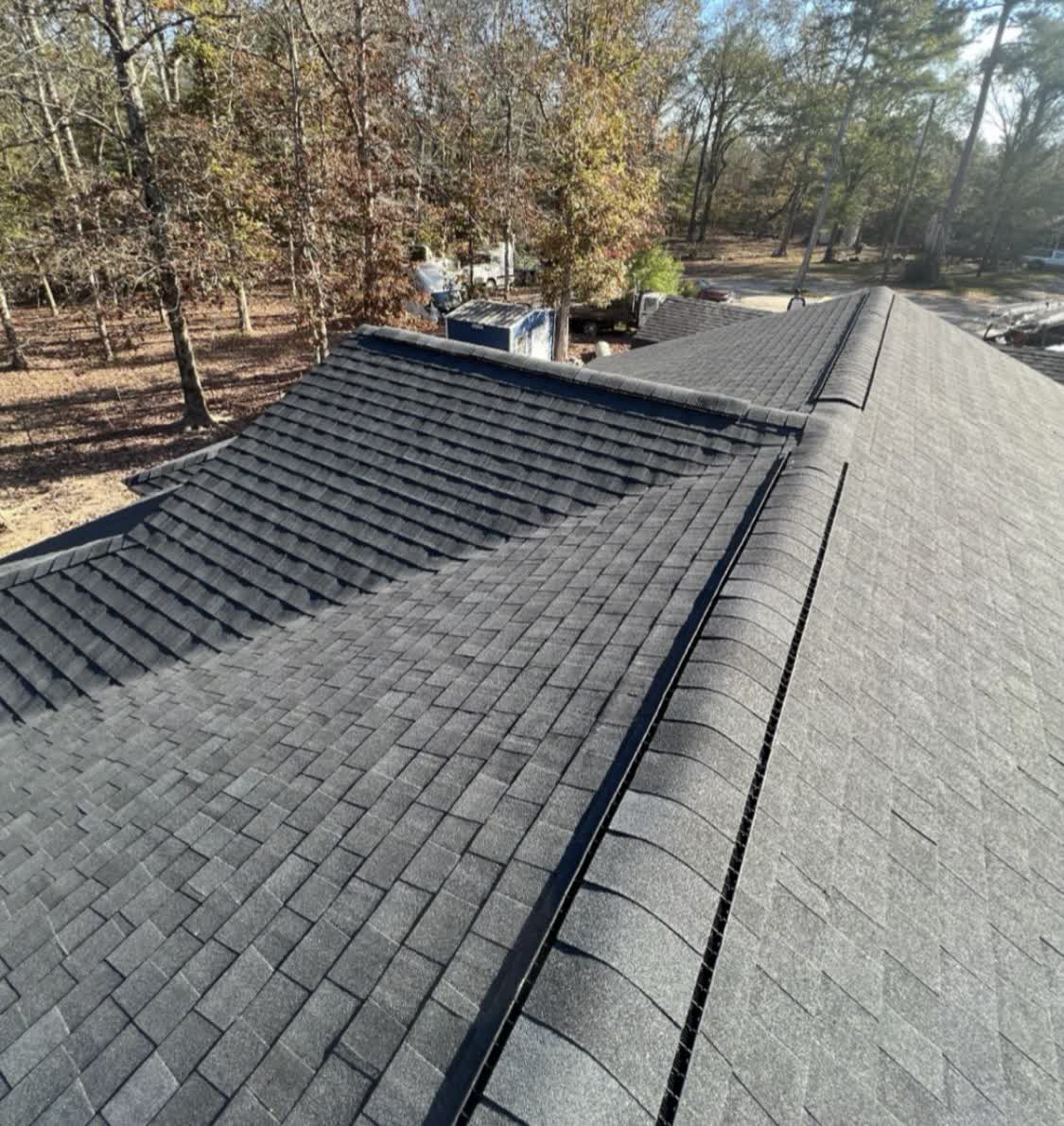
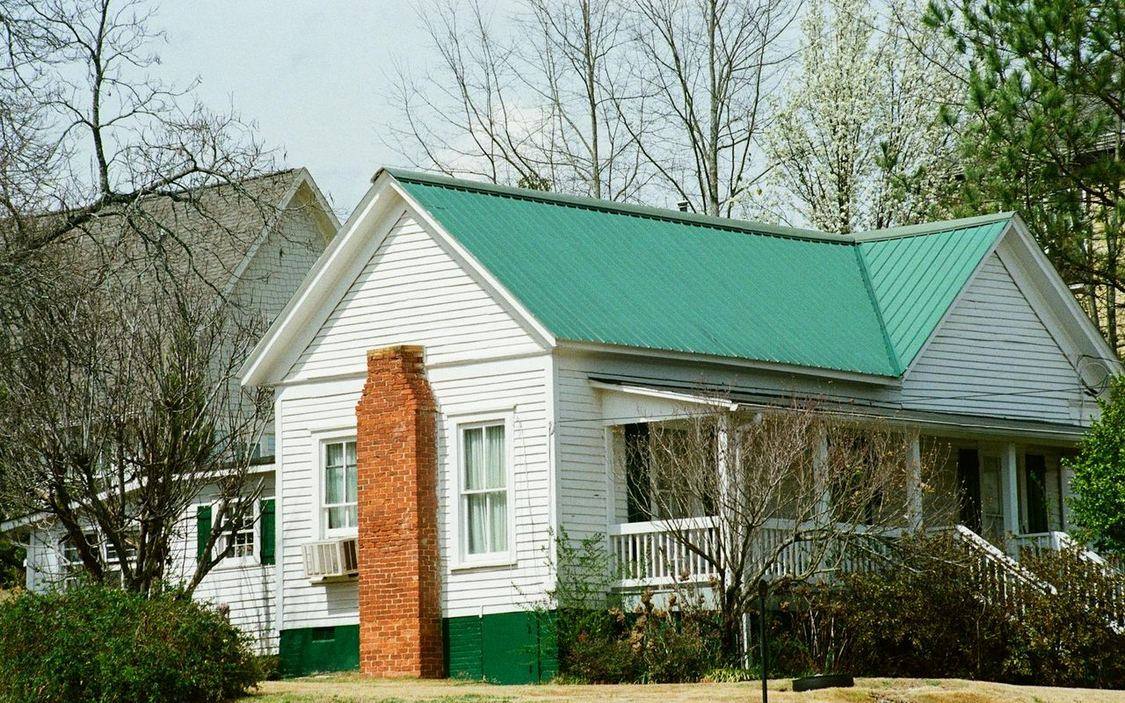
Not all metal roofs are the same. Standing seam panels lock together at raised seams with the fasteners hidden underneath, so there are no screw heads on the surface to loosen or leak over time. Exposed-fastener panels, the corrugated or ribbed style common on barns and shops, are screwed through the face with rubber-washered screws. They cost less and go on faster, but those washers dry out in our heat and the screws need checking and eventual replacement. For a house you plan to live in for decades, standing seam is the system we install and recommend. Our metal roofing page has the details.
Noise
The loud-roof reputation comes from metal on open barns with nothing underneath. A residential metal roof goes over solid decking and underlayment with insulation below, and during rain it is not much louder than a shingle roof. We hear this concern more than any other, and it is the one that goes away fastest once people stand under one.
Cost
Metal costs more up front than architectural shingles, sometimes considerably more, and the gap depends on the panel gauge, the coating, and the complexity of the roof. Spread over the life of the roof, the cost per year of service is often lower for metal, but that only helps if you are there to collect the years. Shingles also cost less to repair after localized storm damage, because a section can be replaced without touching the rest of the roof. Our post on what drives roof replacement cost explains the other variables.
Looks and resale
Architectural shingles come in more colors and blend with more neighborhoods, which matters in subdivisions where the roofs match. Standing seam metal gives a home a sharp, updated look that suits farmhouses, modern designs, and homes on larger lots. Either can help a sale when it is new. Buyers' inspectors notice a metal roof's age less than a shingle roof's.
Our honest recommendation
Choose metal if you plan to stay in the home a long time, want the lowest maintenance, and can absorb the higher up-front cost. Choose architectural shingles if you want the widest color range, the lower initial price, and a proven roof that will serve you well for decades with proper ventilation. Choose cool-rated shingles if you want most of the heat benefit at closer to shingle pricing.
Whichever way you lean, the inspection and written quote are free, and we will lay out both options side by side for your roof so you can decide. Book one on our contact page or call (601) 519-3319.